
How to Plan a Versatile Dock for Swimming, Entertaining, Kayaks and Boats

Updated: Oct 6
A great dock has to do more than reach the water. It should make swimming easy, give guests a comfortable place to gather, hold kayaks without clutter, and still leave enough room for a larger boat to come and go safely.
That mix can get tricky. A swim ladder placed in the wrong spot can interfere with boat lines. A kayak rack can block the best walking path. A seating area can feel inviting until it crowds the edge where people need to board.
The best docks solve these problems early, before lumber, pilings, floats, or permits enter the picture. With a smart layout, the right materials, and a few safety-minded choices, one dock can support lazy summer afternoons, dinner by the water, quick paddle trips, and full-size boat access without feeling cramped.

Start with zones that keep activities from competing
Planning a dock around swimming, entertaining, kayaks and larger boats works best when the layout starts with activity zones. Think of the dock as a small outdoor floor plan, not a single walkway.
Each zone should have enough room to work on its own, while still connecting easily to the others. A good dock often includes:
A clear walking path from shore to watercraft
A swim zone with safe entry and exit
A social zone for seating, shade, or serving food
A paddle zone for launching and storing kayaks
A boat zone with cleats, bumpers, and space for lines
The goal is to avoid overlap. Swimmers should not have to climb out near propellers or dock lines. Guests should not have to step over paddles to reach a chair. Kayaks should not sit where a larger boat needs room to dock.
For many properties, a simple main walkway with one or two wider platforms works well. The main walkway handles movement. The wider platform handles lounging, swimming, and gathering. Boat access can sit along the outside edge, where the approach is easier and water depth is better.
A few common layout options can help guide the plan.
Layout | Best for | Watch for |
Straight dock with a wide end platform | Swimming, lounging, small gatherings | Boat access may be limited if both sides are crowded |
L-shaped dock | Separating boats from swimmers | The corner needs enough width for safe turns and movement |
T-shaped dock | Entertaining and multiple water activities | More exposed to wind, waves, and boat wake |
U-shaped or slip-style dock | Larger boats and protected mooring | Can reduce open swim space if not planned carefully |
If the dock will host groups, leave open floor space. Built-in benches and storage are useful, but too many fixed features can make the dock feel smaller. Movable chairs, folding tables, and removable shade give more flexibility for quiet mornings, parties, and boat days.
Also think about traffic flow. Someone carrying a cooler, paddleboard, or boat bag needs more room than someone walking empty-handed. Keep the main walking route simple and avoid pinch points near ladders, gates, storage racks, and boat cleats.
Choose materials that hold up and feel safe under bare feet
Dock materials need to withstand sun, water, wet feet, dropped gear, and seasonal changes. They also need to feel good underfoot. A surface that becomes slick, splintered, or too hot can make swimming and entertaining less enjoyable.
The main choices usually include pressure-treated wood, composite decking, aluminum, PVC, and specialty marine decking. Each has strengths.
Pressure-treated wood has a classic look and can be cost-effective. It needs sealing or staining over time, and boards should be checked for splinters, raised fasteners, and soft spots.
Composite decking resists rot and does not splinter like wood. It comes in many colors and textures. Some darker colors can get hot in direct sun, so lighter shades or textured surfaces often work better for swim areas.
Aluminum decking is strong, long-lasting, and low maintenance. It works especially well in modular or floating dock systems. Textured finishes help with grip, and lighter finishes can reduce heat.
PVC or marine-grade synthetic decking can handle moisture well and often has good slip resistance. It can be a smart choice near ladders, kayak launch areas, and splash zones.
No matter which surface you choose, prioritize traction. Wet feet, sunscreen, algae, and waves can turn a smooth surface into a hazard. Look for decking with texture, drainage gaps, or slip-resistant strips near high-use areas.

Fasteners matter too. Exposed nails and raised screw heads can hurt bare feet and snag towels or ropes. Use corrosion-resistant hardware rated for marine environments. Stainless steel, hot-dipped galvanized, or manufacturer-approved fasteners are common options, depending on the dock system and water conditions.
For railings, ladders, cleats, and frames, choose materials that match the setting. Freshwater, saltwater, ice, strong sun, and heavy wake all affect durability. If the dock is in saltwater or brackish water, corrosion resistance becomes even more important.
Also plan for comfort. Bare feet can make small design flaws obvious. Test material samples in the sun if possible. A deck board that looks great in a showroom may feel too hot on a July afternoon.
Build in seating, shade, and kayak storage without creating clutter
A dock that supports entertaining needs a place to pause. Seating does not have to be elaborate, but it should feel intentional. Without it, guests tend to sit on edges, block walkways, or gather in spots meant for boat traffic.
Start with the social zone. This could be a widened platform at the end of the dock, a side bump-out, or a covered section closer to shore. The best location depends on wind, views, sun exposure, and how boats approach the dock.
Good seating choices include:
Built-in benches along the inside edge of a platform
Storage benches with lift-up lids for towels and life jackets
Movable outdoor chairs that can be rearranged
Low-profile tables that do not block movement
A small bar-height counter near shore, if utilities and codes allow it
Keep seating away from the main docking edge if larger boats will use that side. People relaxing with drinks or snacks should not have to move every time someone grabs a line or adjusts a fender.
Shade also makes a big difference. A pergola, shade sail, cantilever umbrella, or covered boat lift can help make the dock usable during the hottest part of the day. Any shade structure needs to be secured for wind and approved for the dock type. Removable shade often works well in areas with storms, ice, or seasonal storage needs.
Kayak storage deserves its own plan. Kayaks left loose on a dock become trip hazards and can blow into the water. A dedicated rack keeps them accessible without sacrificing space.
Smart kayak storage ideas include:
Vertical racks near shore for easy carrying
Low horizontal racks along a wide section of dock
Under-bench storage for paddles and life jackets
Wall-mounted racks on a boathouse or shoreline structure
A small floating kayak launch or low platform beside the main dock
The best kayak storage is close to the launch point but not directly in the main walkway. If paddlers need to carry kayaks across the entertaining area, the layout will feel awkward during gatherings.
For easy launching, consider a lower section of dock, a floating launch attachment, or step-down platform. Kayaks sit close to the water, and getting in from a high fixed dock can feel unstable. A lower launch zone improves comfort for beginners, kids, and guests who may not paddle often.
Make room for larger boats without losing the fun
Larger boats need clear access, proper depth, strong tie-off points, and room for passengers to board safely. That does not mean the entire dock has to become a working marina. It means the boat zone needs to be planned with care.
Start with water depth and approach. Boats need enough depth at normal and low water conditions. They also need a path that avoids rocks, sandbars, shallow weeds, or tight turns. If the property sees wind, current, wake, or changing water levels, the dock layout should account for those forces.
The main boat side should include:
Properly placed cleats
Bumpers or fenders to protect the hull
A clear boarding area
Lighting for evening returns
Enough space for dock lines without crossing walking paths
For larger boats, cleat placement matters. Lines should hold the boat securely without stretching across the place where people walk. Crossed lines create trip hazards, especially at night. If possible, keep the main walking route on the inside of the dock and line handling on the outside edge.
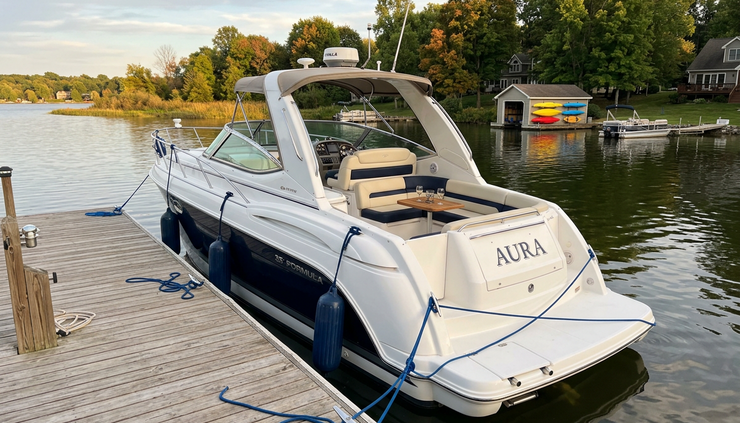
A boat lift can be a good addition if the boat stays at the dock for long periods. It helps protect the hull and reduces wear from waves. The lift location should not block swim access or the best view from the seating area. If space is tight, place the lift on the side least used by swimmers and guests.
Boarding height is another detail that can make or break the dock. Larger boats often sit higher than kayaks or small runabouts. A step, boarding handle, or slightly raised section can make entry safer. Keep the boarding area uncluttered, with no loose coolers, towels, or chairs nearby.
If swimming is a major priority, separate swim space from boat space. This can be done with distance, orientation, or clear rules. For example, the swim ladder might go on the lake-facing end of a platform, while the boat ties along the outside of an L-shaped dock. The separation helps everyone understand where each activity belongs.
When guests are present, the dock should feel relaxed, not like a maze of ropes and gear. Store extra lines, cleaning brushes, fuel equipment, and boat tools in a closed box or shore-side locker. Keep the fun areas clear.
Plan safety and maintenance before the first busy weekend
Safety works best when it is built into the dock, not added after a close call. Swimming, entertaining, kayaking, and boating all bring different risks. A few practical choices reduce those risks without making the dock feel restrictive.
Start with the basics. Install a sturdy swim ladder that reaches low enough into the water for easy climbing. Ladders with wide steps are more comfortable than narrow rungs. Place the ladder where swimmers can exit without crossing boat lines or sitting near a propeller.
Add lighting if the dock will be used after sunset. Low-glare, downward-facing lights help people see edges, steps, and cleats without ruining the mood. Solar lights can work for low-use areas, but wired marine-grade lighting is often better for primary paths.
Keep lifesaving gear visible and easy to grab. A ring buoy, throw rope, or reaching pole should not be hidden in a storage box. If kids or guests will swim, make sure life jackets are easy to find and sized for different users.
The safest dock is the one where people can instantly see where to walk, where to swim, and where boats belong.
A safety-minded dock also has clear edges. Use contrasting trim, low-profile edge lighting, or changes in decking direction to make steps and drop-offs easier to notice. If the dock sits high above the water or hosts young children, railings or gates may be needed in certain sections.
Maintenance keeps the dock safe over time. Even well-built docks change with weather, waves, and use. Build a seasonal routine around inspection and cleaning.
Check these items regularly:
Loose boards, bolts, hinges, and brackets
Splinters, cracks, or sharp edges
Worn bumpers, cleats, and dock lines
Algae buildup on decking and ladders
Rust or corrosion on hardware
Floating dock connections and anchoring points
Solar or wired lights
Kayak racks and storage hardware
Clean walking surfaces with products suited to the decking material and local water rules. Avoid harsh runoff where it could harm the water. A soft brush and regular rinsing often prevent slippery buildup before it becomes a problem.

Seasonal conditions matter as well. In areas with freezing temperatures, floating docks, ladders, and accessories may need removal or winter preparation. In storm-prone regions, removable furniture, shade structures, and kayaks should be secured before bad weather. In high-sun areas, inspect plastics, ropes, and finishes for UV wear.
If the dock includes electrical service, boat lifts, lighting, or water hookups, use qualified professionals and follow local code. Water and electricity leave no room for guesswork. Ground-fault protection, proper conduit, and marine-rated fixtures are key parts of a safe system.
Permits are another part of planning. Dock rules vary by city, county, lake association, state agency, and shoreline type. Size limits, setbacks, environmental protections, and boat lift rules can all affect the design. Check requirements early, before settling on a layout.
Bring the whole plan together
A versatile dock needs balance. The swim area should feel open and safe. The entertaining space should invite people to sit, eat, and linger. Kayaks should be easy to launch, not scattered across the deck. Larger boats should have the access, depth, and hardware they need without taking over every square foot.
The best way to start is with a simple sketch. Mark the shoreline, water depth, sun direction, main views, likely boat approach, and the activities that matter most. Then assign each activity a zone. If two zones overlap, adjust the shape before choosing materials or accessories.
A well-planned dock does not need to be huge. It needs to be clear. Clear paths, clear storage, clear swim access, and clear boat handling make the space feel larger and safer. Add durable materials, comfortable seating, smart kayak storage, and a regular maintenance routine, and the dock can handle almost everything a great day on the water brings.


